Why this new AI agent has tech communities buzzing — and what it means for businesses
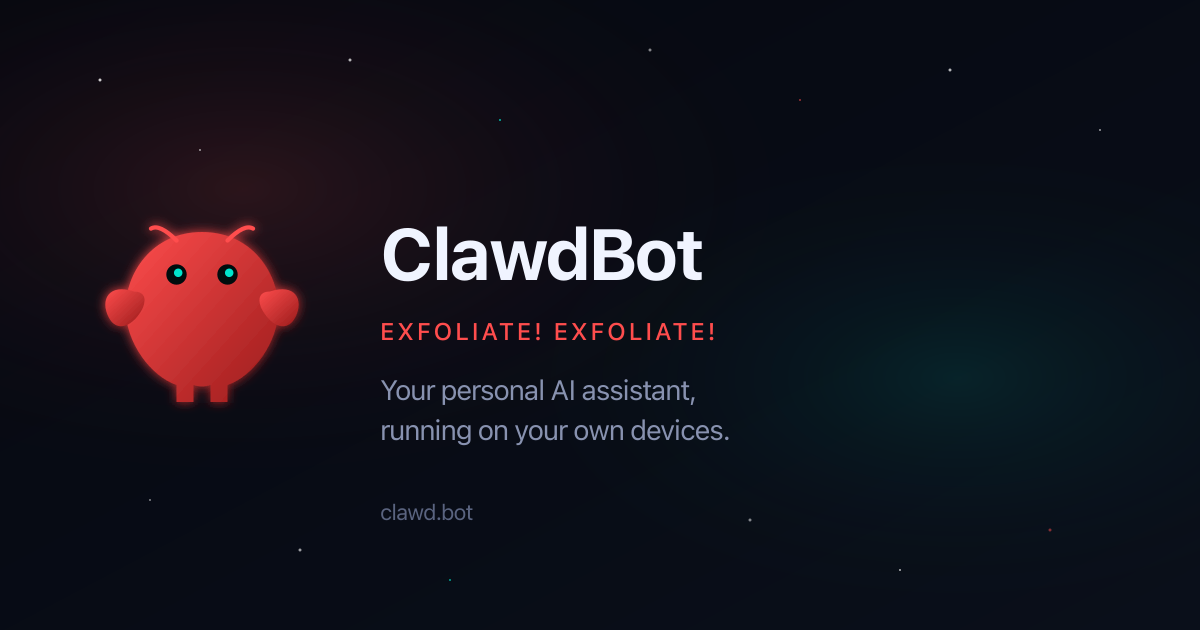
In early 2026, a new Artificial Intelligence phenomenon captured the attention of developers, productivity enthusiasts, and tech media alike: Clawdbot. More than a chatbot, Clawdbot represents a shift in how individuals — and potentially organizations — interact with intelligent systems. Far from being a simple conversational tool, this open-source AI agent is redefining expectations for personal automation and self-hosted AI assistants.

What Clawdbot Actually Is
At its core, Clawdbot is an open-source, self-hosted AI assistant that runs on hardware you control — whether that’s a personal computer, a mini server, or cloud instance — and integrates directly with the communication platforms you already use, such as WhatsApp, Telegram, Slack, and others. Instead of accessing a proprietary cloud service, Clawdbot lives on your own machine and interacts through familiar chat apps.
Unlike typical chatbots that are limited to answering queries, Clawdbot is designed to perform actions on your behalf. It can manage calendars, send reminders, automate workflows, retrieve and summarize information, and interact with apps and data that live outside of its core interface. This capability moves it from simple communication toward autonomous assistance.
Why It’s Trending
There are several reasons Clawdbot ignited widespread interest:
- Self-hosted and privacy-centric: Because it runs on hardware you control and stores context locally, Clawdbot keeps data within your environment rather than a third-party cloud. This appeals to individuals and organizations concerned about privacy and compliance.
- Messaging-first experience: It meets users where they already spend significant time — their chat apps. This makes interacting with a powerful AI feel natural and low-friction.
- Persistent context: Clawdbot maintains long-term memory across conversations and tasks, allowing it to adapt to user behavior and preferences over time instead of resetting after each session.
- Proactive assistance: Beyond responding on demand, Clawdbot can send scheduled reminders and notifications, offer prompts based on context, and even execute automated tasks in the background.
These features together create an experience closer to a digital teammate than a simple chatbot. It’s part of a broader trend toward AI assistants that both understand context and take action across services.
Comparison With Conventional AI Tools
Mainstream AI assistants like ChatGPT or Claude primarily provide conversational responses from a central server. Clawdbot’s differentiators are its self-hosting architecture and integration with personal workflows. While traditional cloud-based AI requires sending data to a provider’s servers, Clawdbot keeps computation and data local, appealing to users who want more control and lower dependency on external platforms.
This architecture also positions Clawdbot as a tool that can automate real-world tasks — not just answer text prompts. It can interact with calendars, files, and other applications, effectively turning passive AI into an active automation layer.
Challenges and Considerations
Despite its promise, Clawdbot is not without limitations. Because it runs locally and integrates directly with personal devices and accounts, users must carefully consider security and access control, and ensure proper safeguards are in place. Technical setup can be non-trivial for non-technical users, requiring familiarity with local installation, API keys, and system configuration.
Additionally, as with any powerful agent, the potential for misuse or unintended automation actions underscores the need for clear operational guardrails. Responsible deployment and robust governance practices are essential for individuals and companies adopting such tools.
What This Means for the Enterprise
Although Clawdbot is currently most popular among developers and advanced users, its underlying concepts foreshadow shifts in enterprise AI adoption:
- Localized AI autonomy: Organizations may increasingly seek self-hosted AI solutions that reduce reliance on external cloud services for sensitive workflows.
- Chat interfaces as work portals: Messaging platforms are becoming unified access points for interacting with AI, workflows, and data, lowering training overhead and increasing adoption.
- Persistent AI memory: Long-term context retention will enable more personalized and proactive automation — a significant step beyond one-off prompt responses.
Clawdbot’s viral rise illustrates both the potential and the complexity of modern AI assistants that do more than respond — they act.
Final Thoughts
Clawdbot reflects a broader evolution in AI technology: from centralized, reactive systems toward distributed, proactive assistants embedded in everyday tools and workflows. While challenges remain — especially around security and usability — its rapid adoption highlights growing interest in AI that not only understands human language, but also executes tasks autonomously.
At TechTack, we believe the innovations emerging from projects like Clawdbot signal how AI will be integrated into personal and professional life in the years ahead — blending familiarity, autonomy, and control in ways that redefine productivity.
Related at TechTack
Frequently Asked Questions
What is Clawdbot?
Clawdbot is a self-hosted AI assistant that goes beyond chat to perform real automation, integrating with everyday messaging platforms to execute tasks across your tools.
How is Clawdbot different from a typical chatbot?
A typical chatbot answers questions. Clawdbot takes action — running tasks, connecting to your tools, and operating in a private, self-hosted environment.
What does Clawdbot mean for businesses?
It signals a shift toward AI agents that execute work, not just respond. Businesses that design workflows around action-taking AI will gain efficiency advantages.